On this page
Affordable Tucson, Arizona Car Insurance Without Guesswork
ArizonaCarInsurance.com helps Tucson drivers compare personal auto insurance coverage by phone and online – not at a walk-in office. Operated by Drivers Insurance Agency, Inc., we provide remote, agent-assisted service across Tucson, Pima County, and statewide Arizona.
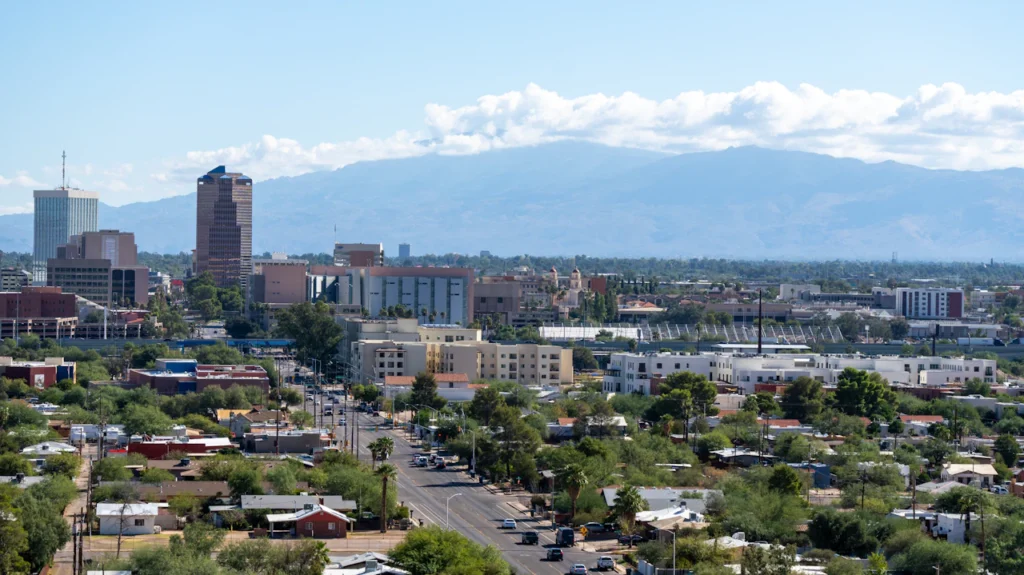
Ready to start? Call (844) 539-1313 or begin an agent-assisted quote at arizonacarinsurance.com/quote. Our insurance agent team will walk you through your coverage options – a conversation about coverage levels that fit your situation. A quote request does not activate coverage; confirm the effective date and time with the insurer.
Tucson drivers may need to plan for desert heat, monsoon flash flooding, and University of Arizona commutes. A student move can also change where a vehicle is kept. These practical details help frame questions about car insurance coverage, vehicle use, and the correct garaging address.
Finally, Car Insurance Help Built for Tucson Drivers
When getting insurance in Tucson, explain where the car is kept and how you use it. An agent-assisted review gives you a chance to ask about Arizona requirements, monsoon damage, and campus parking.
ArizonaCarInsurance.com focuses exclusively on Arizona drivers. That means every piece of guidance is built around state laws, Pima County driving conditions, and the specific scenarios Tucson drivers choose to ask about – campus parking, seasonal visitors, commuting on I-10 or I-19, and more.
Because quotes are agent-assisted, you can ask about things like garaging a car near the University, occasional trips between central Tucson and Green Valley, or how parking in a flood-prone area might shape your coverage decisions. You can compare minimum liability coverage alongside fuller options in one conversation and choose protection that fits your budget and needs, without pressure to add unrelated products like home insurance, renters insurance, or homeowners insurance you didn’t ask about.
Why ArizonaCarInsurance.com Works for Tucson, AZ Car Insurance
The value here is straightforward: Arizona-specific guidance, access to multiple companies, and clear explanations of what’s required versus what’s optional under Arizona law.
-
Arizona-Focused Guidance – We explain Arizona requirements and common Tucson scenarios – monsoon season driving, student drivers adjusting garaging addresses, snowbirds who garage vehicles in southern Arizona part of the year. Review your policy and official MVD notices for the requirements that apply to you.
-
Coverage Comparisons in One Place – Agents can present multiple liability limit options, deductible levels, and comprehensive and collision setups so you can compare rates and coverage without calling each insurer separately. Drivers can compare rates from multiple car insurance companies through a single conversation.
-
Help With SR-22 and Non-Owner Options – The agency can assist many Tucson drivers who need SR-22 filings or non-owner SR-22, subject to insurer eligibility. Visit our SR-22 insurance page for deeper detail on how the process works statewide.
-
Clear Explanations of Local Risks – Agents explain how coverage types may respond to events like theft of a vehicle from a campus parking garage or water damage from a flooded wash, subject to each policy’s terms and deductibles. No promises of specific claim outcomes – just honest information.
-
Straightforward, No-Jargon Conversations – You’ll get plain-language explanations of things like UM/UIM, glass coverage options, and why lenders often require comprehensive and collision coverage even though the state does not.
How Getting Tucson Car Insurance Through Us Works
Getting started is simple and handled entirely by phone or online forms – no office visit required.
Step 1: Reach Out With Your Tucson Driving Details
Start at arizonacarinsurance.com/quote or call (844) 539-1313. Have these details ready:
-
VIN(s) and vehicle year, make, model
-
Driver’s license numbers for all drivers
-
Current address in Tucson or Pima County
-
Usual parking and garaging location (garage, covered lot, street)
-
Recent tickets, accidents, or claims history
Be prepared to describe your commute – whether it’s downtown Tucson, the UA campus, the Davis-Monthan Air Force Base corridor, or South Tucson surface streets – and your vehicle use. If you drive for delivery or ride-hail, mention it upfront so the agent can see if insurer approvals are available.
Step 2: We Compare Arizona-Legal Coverage Options
Your agent reviews Arizona’s 25/50/15 minimum liability standard and then walks through higher-limit options for drivers who want better coverage. Arizona requires minimum liability coverage of 25/50/15 – that means $25,000 per person for bodily injury, $50,000 per accident for bodily injury, and $15,000 per accident for property damage.
From there, the conversation covers liability versus collision versus comprehensive coverage, plus optional protections like UM/UIM and medical payments. Drivers can also ask about roadside assistance as an optional service if offered by the insurer. If SR-22 is needed, the agent can discuss how the insurer files the form with Arizona MVD – though legal advice about specific suspension periods is outside our scope.
Step 3: You Choose and We Help You Move Forward
You select coverage levels and deductibles with help from the agent to fit your comfort and budget and, when appropriate, lower premiums while balancing out-of-pocket risk, then the agent helps you proceed with the chosen insurer. A quote request does not bind coverage. Confirm that the insurer has bound coverage and provided an effective date and time before relying on it.
Once the policy is active, proof of insurance documents are typically provided by the insurer (often electronically), which you can use for registration or traffic stops as permitted. An SR-22 is a separate certificate filed with MVD by the insurer.
What Makes Our Tucson, Arizona Car Insurance Help Different
Our service combines coverage comparisons with explanations of Arizona requirements. The following points describe how we help Tucson drivers:
-
Arizona-Focused Website – ArizonaCarInsurance.com is the Arizona brand of Drivers Insurance Agency, Inc. We concentrate on Arizona car insurance laws, regulators, and MVD rules that affect every auto policy issued here.
-
Independent, Not Tied to One Insurer – As an independent agency, ArizonaCarInsurance.com can look at options from multiple companies instead of forcing a single company fit. Available insurers depend on your circumstances and the agency’s current appointments; an agent can confirm the options for your quote.
-
Education Over Hype – Many Tucson drivers are unsure about things like UM/UIM, financial responsibility requirements, or what an SR-22 filing actually involves. Our site and agents provide educational resources, including the minimum car insurance and SR-22 insurance pages for deeper reading.
You can speak with an Arizona-focused insurance agent who explains what actually matters for Tucson roads and weather.
Understanding Tucson Car Insurance Basics Under Arizona Law
All Tucson drivers must follow statewide Arizona rules, enforced by the Arizona MVD and overseen by the Department of Insurance and Financial Institutions (DIFI). What follows is a summary of general concepts – always review your own policy documents and MVD status for specifics.
Arizona Minimum Liability Requirements (25/50/15)
For an auto liability policy, Arizona’s minimum limits are 25/50/15. In plain numbers:
-
$25,000 bodily injury per person
-
$50,000 bodily injury per accident
-
$15,000 property damage per accident
Arizona law allows certain financial responsibility alternatives – such as qualifying deposits or surety bonds – but most Arizona drivers satisfy requirements through an auto liability policy. Many factors beyond the minimum come into play: drivers are advised to consider higher liability limits than the state minimum, especially given today’s vehicle repair costs and medical expenses. Higher limits provide more protection if you cause a serious accident on I-10 or anywhere else on Tucson roads.
More detail on statewide minimums is available on our minimum car insurance page.
Liability vs Comprehensive and Collision: A Tucson Scenario
Imagine a driver on a surface street near a washed-out intersection during monsoon season who hits another vehicle after failing to stop in time on wet pavement.
Liability coverage would apply to injuries and property damage the driver causes to others – the other driver’s medical bills, their vehicle repairs. But liability doesn’t pay a cent to fix the at-fault driver’s own car.
Collision coverage may help repair the at-fault driver’s own vehicle after hitting another car or object, subject to the policy deductible. Collision coverage is not required by Arizona law, but lenders often require it for financed or leased vehicles.
Comprehensive coverage responds to non-collision events like theft, vandalism, or certain types of flood and storm damage – again subject to terms and deductible. Comprehensive coverage protects against theft, flooding, and vandalism, but not every flood-related loss is automatically covered. Drivers should review their specific policies for exclusions, limits, and deductibles before storm season.
“Full coverage” is an informal term, commonly used for a combination of liability, collision, and comprehensive coverage. Check the actual limits, deductibles, and exclusions in each quote. Vehicle market value and loan status impact the necessity for comprehensive and collision coverage – if your car is paid off and older, the cost-benefit calculation changes.
Uninsured/Underinsured Motorist (UM/UIM) and Medical Coverages
UM/UIM in Arizona is bodily injury coverage that can help when another driver who hurts you has too little or no liability insurance. Arizona drivers can add uninsured/underinsured motorist coverage for additional protection beyond what at-fault drivers carry.
Arizona insurers must offer UM/UIM in writing, but drivers may choose whether to buy or decline it. Uninsured motorist coverage is optional but must be offered. This matters in Tucson where, like everywhere, not every driver on the road carries adequate insurance.
Medical payments coverage is an optional add-on that may help with medical expenses for you and your passengers, regardless of fault, up to chosen limits. It’s particularly useful when health insurance has high deductibles or co-pays.
Under ARS 20-264, insurers issuing private passenger policies with comprehensive coverage must offer an option for covered safety-glass repair or replacement without a deductible. But this must be actively elected – it is not automatically included or “free windshield replacement.” Drivers should ask their agent and check their declarations page.
Tucson-Specific Driving Conditions and Coverage Considerations
Heat, dust storms, and summer monsoon flooding are relevant to driving in Tucson and elsewhere in Arizona. Coverage choices should reflect your vehicle, finances, and use. A named road or weather hazard does not establish what an insurer will charge you.
Monsoon Season, Flooded Washes, and “Operation Splash”
Tucson’s monsoon season runs from June to September. Intense rainfall can quickly flood dips and washes across city streets, creating dangerous flash flooding conditions. Monsoon storms can cause flash flooding in Tucson with little warning.
The City of Tucson’s Operation Splash program runs from June 15 through mid-September. City crews place barricades at dip crossings and flooded washes when severe weather is forecast, then assess roadways and clear hazardous debris after floodwaters recede. The program activates seasonally – it is not active year-round.
The key safety message: “Turn Around, Don’t Drown!” Never enter a flooded wash or drive around barricades. Report storm-related damage by calling 311 or using Tucson’s 311 Online Portal.
For current road-closure information during storms, check Pima County’s road-closure updates.
From an insurance angle: comprehensive coverage may cover certain water or flood damage to your vehicle, depending on policy terms and deductibles, but not every flooded-vehicle situation is covered. Liability coverage never repairs your own car. Driving safely and avoiding flooded areas is the first “coverage layer.”
Sun, Heat, and Year-Round Desert Driving
Extreme heat accelerates vehicle aging in Tucson. Long-term sun and UV exposure affect paint, interiors, plastic components, tires, batteries, and cooling systems. While maintenance addresses most of these issues, some drivers consider comprehensive coverage for related risks like fire, theft, or vandalism.
Whether your car sits in a secure garage, a covered lot, or on a street in central Tucson matters for rating. Insurers ask about garaging location because it affects risk exposure – weather, theft, vandalism. Describe your actual parking situation accurately when getting quotes.
Tire condition, coolant systems, and batteries are critical for safety in summer heat, though these are maintenance issues, not items car insurance generally pays to replace.
Checking Road and Weather Information Before You Drive
Tucson drivers should check Pima County’s road-closure updates during storms for the latest information. Conditions can change rapidly, especially during monsoon afternoon thunderstorms, so it’s also smart to check conditions before heading toward destinations like Saguaro National Park.
Plan routes that avoid known low-water crossings when rain is in the forecast, especially at night when water depth is impossible to judge. Insurance is there for covered accidents and losses – not as a replacement for avoiding obvious hazards.
University of Arizona Students and Tucson Campus Drivers
Many vehicles in and around Tucson are tied to the University of Arizona – students, staff, and visiting families. Insurance decisions for these drivers involve accurate vehicle-use, household-driver, and garaging information.
Commuting, Campus Parking, and Garaging Address
The University of Arizona Parking & Transportation Services offers hourly garage parking, various permit types (garage, lot, street, motorcycle, flexible, and occasional commuter permits), and park-and-ride options with Cat Tran shuttle service. Hourly garage parking is available for visitors and occasional drivers. Students and staff should review campus parking maps and posted signs, and can call UA Parking & Transportation Services dispatch at (520) 621-1108 if they hold a permit and can’t find a space.
The “garaging address” on a car insurance policy should reflect where the car is actually kept most of the time. If a student drives to Tucson from another Arizona city and parks near campus for months at a time, that Tucson address is typically what the insurer needs. Insurance costs vary based on driving record, credit score, and ZIP code – and zip codes within Tucson carry different risk profiles.
Misrepresenting garaging location can create serious problems at claim time. Students should update their address when they move into or out of Tucson.
Students Sharing Cars and Occasional Drivers
In shared housing situations popular near UA, disclosing household drivers and regular users of the vehicle is essential; the insurer determines who must be listed or otherwise addressed under its rules. If a parent owns the vehicle but the car primarily stays with a student in Tucson, the carrier will want accurate details about where and how it is used.
A non-owner policy is generally not meant to cover regularly available or household vehicles and usually won’t include physical damage for a borrowed car. It functions as a separate insurance policy for liability only. Students and parents should talk with an agent about eligibility and limitations.
Seasonal Moves and Mileage Changes
Some students take their car home during breaks. Others leave it parked in Tucson for months. It’s helpful to tell your agent if the vehicle will sit parked for long stretches – some insurers factor lower mileage favorably, and low mileage discounts may apply.
However, lower mileage is never a reason to remove legally required liability coverage for a car that could still be driven. Before each school year, students and parents should do a quick coverage review to ensure the address, listed drivers, and coverage types still match reality.
SR-22 and Non-Owner Insurance for Tucson Drivers
Some Tucson drivers face license suspensions or MVD actions where SR-22 proof of financial responsibility is required before reinstatement.
What SR-22 Means in Arizona
SR-22 is a certificate of financial responsibility filed electronically by an insurer with the Arizona MVD. It is not a separate insurance policy and not a special type of coverage.
Arizona MVD decides who needs SR-22, for how long, and from what date based on the specific violation or suspension – often three years for certain actions, but it varies case by case. SR-22 does not itself give permission to drive. The driver must also satisfy all MVD requirements for reinstatement.
For statewide details, visit our SR-22 insurance page.
SR-22 With an Owner Policy vs Non-Owner Policy
SR-22 can be added to a standard owner auto policy that insures a specific vehicle – the common scenario when a driver owns a car in Tucson.
Non-owner SR-22 is a possible option for eligible drivers who truly do not own a vehicle and do not have regular access to a household car, subject to insurer rules. Non-owner policies typically do not cover physical damage to any car you borrow and are not meant for ride-hail, delivery, or regular borrowing of the same vehicle.
If required SR-22 coverage lapses, MVD may suspend your license and registration until proof is restored. Do not assume every lapse automatically restarts a three-year period; confirm the dates and reinstatement steps with MVD. Continuous coverage is critical.
Who Our Tucson Car Insurance Help Is For
ArizonaCarInsurance.com serves a wide range of Tucson-area drivers with different needs and budgets:
-
Everyday Commuters – Drivers using I-10, I-19, or surface streets to work, school, or base who want balanced liability, collision, and comprehensive coverage options. Tucson drivers face heavy traffic on I-10 and I-19, making adequate coverage limits especially important. Drivers with clean records may also qualify for safe driver savings, and agents can help review available discounts based on driving history and coverage needs.
-
University of Arizona Students and Families – Households deciding how to insure a car that a student keeps near campus, navigating garaging address changes and multiple vehicles across family members. Families insuring a student vehicle alongside eligible household policies with one provider can also ask about bundling discounts.
-
Drivers Recovering From Violations – People who need help exploring SR-22 filings and compliant coverage after MVD actions, without judgment. The agency helps navigate the process calmly.
-
Seasonal Residents and Snowbirds – Part-time Tucson residents who garage their vehicles in Pima County for part of the year and need policies that reflect where the car actually stays.
What to Have Ready Before You Call for a Tucson Quote
Having a few details handy makes the quote process smoother and faster. Your monthly premiums depend on the insurer, drivers, vehicles, coverage choices, and other rating factors.
-
Drivers: Full name, date of birth, license number, and how each person uses the car (commuting, pleasure, school)
-
Vehicle details: VIN, year, make, model, vehicle type, estimated annual mileage, and where it is typically parked overnight in Tucson or nearby
-
Current insurance information: Existing carrier (if any), liability limits, deductibles, and renewal date for easy side-by-side comparisons
-
Driving history: Recent tickets, accidents, DUIs, or lapses in coverage, plus any MVD letters about SR-22 or future financial responsibility
-
Special uses: Any business, delivery, or rideshare use – this must be discussed with the agent so they can see if insurer approvals are available
Comparing quotes helps identify better coverage options. Compare car insurance rates using the same limits, deductibles, drivers, and vehicle information. Your actual cost depends on your driving record, vehicle, and chosen coverage levels.
Tucson, Arizona Car Insurance FAQs
These FAQs answer common questions specifically from Tucson drivers and students.
Is car insurance required to drive in Tucson, Arizona?
Yes. Arizona law requires all drivers, including those in Tucson, to maintain at least 25/50/15 minimum liability coverage or a qualifying financial responsibility alternative. Arizona is an at-fault state regarding auto accidents, meaning the driver who causes a collision is responsible for damages. Driving without required coverage can trigger MVD penalties, fines, and SR-22 requirements.
Does car insurance cover monsoon flooding to my car?
Only certain policies with comprehensive coverage may help with specific types of water or flood damage. Comprehensive coverage protects against monsoon and hail damage in many cases, but coverage depends on the individual policy’s terms and exclusions. Liability-only policies do not pay to repair your own vehicle. Not every flood-related incident is covered – review your policy before storm season.
Can I insure my car in Tucson if I’m a student from another Arizona city?
Many students keep their home address for some records but garage their car near the University of Arizona. Insurers typically care most about where the car is kept and driven. Talk with an agent about the correct garaging address and listed drivers to avoid issues at claim time.
Can I switch my Tucson car insurance policy at any time?
Drivers can usually change insurers mid-term, but you should coordinate start and end dates carefully to avoid any lapse. Review any cancellation fees or minimum-earned premium with the current insurer before switching. Comparing rates from multiple insurance companies through the agency can help you compare available policies. Carrier availability must be confirmed for your quote. The goal is not automatically the lowest price, but the right balance of coverage and premium for your budget.
How does an SR-22 work for a Tucson driver with a suspended license?
SR-22 is an insurer-filed certificate sent to the Arizona MVD confirming the driver has required liability coverage. It does not give permission to drive. The driver must still satisfy all MVD reinstatement conditions. The agency cannot guarantee reinstatement or specific dates.
Does my Tucson policy automatically include windshield replacement?
No. Comprehensive coverage in Arizona must be offered with an option for a glass deductible waiver, but drivers must actively choose and accept that option. Not all policies automatically include $0 glass repair. Check your declarations page or ask your agent.
Can I get coverage if I use my car for food delivery or rideshare in Tucson?
Delivery and rideshare use require insurer review and sometimes special endorsements or commercial policies. Tell the agent upfront about any app-based driving so they can see what options are available. Standard personal auto policy coverage may not apply during commercial use.
Get Started on Tucson, Arizona Car Insurance Today
Now that you understand the key coverage basics, local risks, and Arizona requirements that affect Tucson auto insurance, take the next step.
Call (844) 539-1313 or start an agent-assisted quote at arizonacarinsurance.com/quote.
You’ll speak with an Arizona-focused agency that understands Tucson conditions, Arizona MVD requirements, and common student, commuter, and SR-22 situations. Ask about a safe driver discount, multi-vehicle discounts, paid-in-full pricing, autopay, or bundling auto with another eligible policy. Availability and savings vary by insurer and product. Your agent can review the total premium, fees, and applicable discounts; no fixed savings percentage is promised. Paying the full policy term upfront may reduce the total cost. For example, Progressive’s discount guide describes a paid-in-full discount and says it cannot be combined with its automatic-payment discount. That example does not establish availability through this agency; ask the quoting insurer to compare the full-term cost under each payment plan.
Don’t wait until after a monsoon storm, campus accident, or MVD notice. Review your coverage before problems arise – and save money by making informed choices rather than scrambling after the fact.